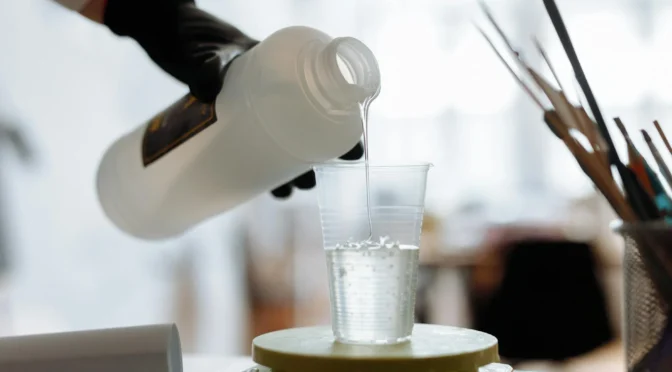
Have you ever been halfway through a recipe, only to realize you’re not quite sure how many cups are in a quart? Or perhaps you’ve ended up with a baking disaster because you estimated instead of accurately measuring? Trust me, we’ve all been there! A tiny error with a teaspoon here or there can throw off the whole recipe and ruin it. That’s why understanding kitchen conversions is so crucial for successful cooking and baking.
Understanding the Basics: What Constitutes a Cup?

Let’s start with the foundation: the humble cup. What exactly is a cup when it comes to cooking and baking?
- Definition and Units: A cup is a unit of volume measurement, and in the US customary system, it’s standardized to 8 fluid ounces. In metric units, this is approximately 237 milliliters. It’s important to note that we’re talking about a volume measurement, not weight. Eight ounces of feathers will look very different from eight ounces of water!
- Everyday Uses: The cup is a workhorse in the kitchen, appearing in countless recipes for everything from baking cakes to making sauces and preparing soups. You might use a cup to measure flour for cookies, sugar for a pie filling, or broth for a comforting soup.
- Visual Aid: To help you visualize what a cup really looks like, consider these comparisons:
- A standard baseball is roughly the same volume as 1 cup.
- A standard coffee mug (the kind you get free at conferences!) typically holds around 1 cup.
- A small yogurt container is very often the size of 1 cup.
See the image below for visual comparison of cup measurement
[Insert an image here comparing a cup measure with a baseball, a standard coffee mug, and a small yogurt container.]
Grasping the Concept of a Quart

Want to learn more?
Explore our complete guide and resources.
- Definitions and Units: A quart is a larger unit of volume. In the US customary system, 1 quart is equal to 32 fluid ounces. This is also roughly equivalent to 946 milliliters. Again, let’s clarify we’re talking about liquid quarts. There are dry quarts that have slightly different measures, but liquid quarts are much more commonly used in cooking.
- Relevance: The quart is particularly useful in larger recipes, when dealing with bulk ingredients, or when storing leftovers. You might see quarts used for measuring broth in a large soup recipe, storing homemade ice cream, or making a batch of jam. It is a quarter of a gallon, hence the name “quart”.
- Visual Aid: Think of a large bottle of sports drink. Many of these bottles hold close to a quart of liquid. A standard carton of broth or stock is also usually a quart.
See the image below for visual comparison of quart measurement
[Insert an image here comparing a quart measure with a large sports drink bottle and a standard broth carton.]
## How Many Cups are in a Quart? The Simple Math
Alright, let’s get to the heart of the matter! This is the key conversion you need to know.
- Direct Answer: The answer is straightforward: 1 quart equals 4 cups.
- Breakdown: To really understand this, think of it this way: a quart is four times the size of a cup. You could fill one quart-sized container with four separate cups of liquid. You can also look at it this way:
- Imagine you have a quart of milk.
- You want to divide it equally into four cups.
- Each cup will contain exactly one cup of milk.
- Practical Examples: Let’s say you’re making a large batch of soup that calls for 1 quart of chicken broth. You could use a 1-quart carton of broth, or you could measure out 4 individual cups of broth. Similarly, if a recipe calls for 1 quart of ice cream and you only have measuring cups, you’ll need to scoop out 4 cups of ice cream.

Breaking It Down: Can 1 Quart Make 2 Cups?
Now, let’s address the original question directly: “Can 1 quart make 2 cups?”
- Detailed Explanation: Yes, absolutely! Since 1 quart equals 4 cups, 2 cups is exactly half of a quart. Another way to look at this is that a quart is twice the size of 2 cups. It means you can fill two 2-cup measuring vessels from one quart measure.
- Practical Scenarios: This knowledge is incredibly useful in a variety of situations.
- Halving Recipes: Suppose you want to halve a recipe that calls for a quart of milk. You know that you’ll need to use 2 cups of milk instead.
- Using Leftovers: You have a quart of leftover soup and want to divide it between two bowls. You’ll put 2 cups of soup in each bowl.
- Scaling Recipes: Imagine you are scaling a recipe from a small batch to a larger batch. Knowing that 1 quart makes 2 cups is essential to get the ratio correct.
- Enhanced Understanding: Think of it like cutting a pie. If you cut a pie into four equal slices, each slice represents one cup when a pie represents one quart. If you only take two slices, you have half the pie, or 2 cups.
Explore More: How Many Cups in Two Quarts?
Once you’ve mastered the conversion between quarts and cups, it’s helpful to understand larger volumes as well.
- Conversion: If 1 quart equals 4 cups, then 2 quarts equal 8 cups. The simple math is: 2 quarts * 4 cups/quart = 8 cups.
- Importance: Understanding larger conversions is particularly beneficial in bulk cooking, meal prepping, or when you’re planning events. This can also be useful when a recipe needs to be doubled or tripled, it can be easier to measure the right number of cups when using the quarts.
- Practical Examples:
- Large Soup Batch: You’re making a large batch of soup for a potluck. The recipe calls for 2 quarts of broth. You know you’ll need 8 cups of broth in total.
- Meal Prep: You’re meal prepping for the week and want to make a big batch of chili. The recipe calls for 2 quarts of diced tomatoes. You’ll need 8 cups of diced tomatoes.
- Event Planning: When planning large parties, it is good to measure the right amount of liquid. For example, the guest list requires 8 quarts of juice for the party. Then it equals 32 cups of juice to prepare ahead.
Expanding the Knowledge: Pints and Other Conversions
To truly become a kitchen measurement master, it’s important to understand other related conversions.
- Other Conversions: Let’s talk about pints. 1 quart equals 2 pints. Also, since 1 quart equals 4 cups, and 1 quart equals 2 pints, we know that 1 pint equals 2 cups.
- Practical Examples:
- Ice Cream: A common size for ice cream containers is 1 pint. So, if you need 2 cups of ice cream for a recipe, one pint container is perfect.
- Berries: You’re buying fresh berries at the farmers market. They’re sold in pint containers. You know that one pint of berries is equal to 2 cups.
- Cream: Recipes sometimes list the amounts for heavy cream or other creams in pints. 1 pint of heavy cream in fact equals 2 cups.
- Reference Chart: To help you keep track of these conversions, here’s a handy chart:
Measurement Equivalent 1 cup 8 fluid ounces 1 pint 2 cups 1 quart 2 pints 1 quart 4 cups 1 gallon 4 quarts 1 gallon 16 cups
Essential Kitchen Conversions Everyone Should Know
While we’ve focused on quarts and cups, many other essential kitchen conversions can make your life easier.
- Additional Conversions: Here are some other common conversions you should be familiar with:
- Tablespoons to Teaspoons: 1 tablespoon = 3 teaspoons
- Ounces to Tablespoons: 1 fluid ounce = 2 tablespoons
- Pounds to Ounces: 1 pound = 16 ounces
- Memory Tips: To help you remember these conversions, try using mnemonic devices or rhymes. For example:
- “A pint’s a pound the world around” (for water, approximately). This helps you remember that a pint of water weighs about a pound.
- “Two tablespoons are a fluid ounce.”
- Printable Chart: Here’s a downloadable, printable conversion chart for easy reference in the kitchen:
[Insert a link to a downloadable PDF conversion chart here. This chart should include: cups, quarts, pints, gallons, tablespoons, teaspoons, ounces, and pounds.]
Samantha’s Top Picks: Favorite Measuring Tools
Having the right tools can make all the difference in achieving accurate measurements. Here are some of my go-to measuring tools in the kitchen:
- Liquid Measuring Cups: These are essential for accurately measuring liquids. Look for cups with clear markings and a spout for easy pouring.
- OXO Good Grips 2-Cup Angled Measuring Cup: I love this measuring cup because the angled design allows you to easily read the measurements from above, without having to bend down.
[Insert affiliate link to OXO Good Grips 2-Cup Angled Measuring Cup]
- OXO Good Grips 2-Cup Angled Measuring Cup: I love this measuring cup because the angled design allows you to easily read the measurements from above, without having to bend down.
- Dry Measuring Cups: These are specifically designed for measuring dry ingredients like flour and sugar. Opt for a set that includes standard sizes (1 cup, ½ cup, ⅓ cup, ¼ cup).
- Bellemain Stainless Steel Measuring Cups: These stainless steel measuring cups are durable, easy to clean, and have clearly marked measurements.
[Insert affiliate link to Bellemain Stainless Steel Measuring Cups]
- Bellemain Stainless Steel Measuring Cups: These stainless steel measuring cups are durable, easy to clean, and have clearly marked measurements.
- Measuring Spoons: Measuring spoons are crucial for measuring small amounts of ingredients like spices and extracts. Look for a set that includes standard sizes (1 tablespoon, 1 teaspoon, ½ teaspoon, ¼ teaspoon).
- Spring Chef Heavy Duty Stainless Steel Metal Measuring Spoons: I recommend these measuring spoons because they’re made of heavy-duty stainless steel and have both standard and metric measurements.
[Insert affiliate link to Spring Chef Heavy Duty Stainless Steel Metal Measuring Spoons]
- Spring Chef Heavy Duty Stainless Steel Metal Measuring Spoons: I recommend these measuring spoons because they’re made of heavy-duty stainless steel and have both standard and metric measurements.
- Kitchen Scale: For the most accurate measurements, especially when baking, a kitchen scale is invaluable.
Related: How Many Cups In A Quart
Conclusion: Empowered Cooking with Accurate Measurements
We’ve covered a lot in this post! You now have a solid understanding of cups, quarts, and the importance of accurate kitchen conversions. Remember, 1 quart equals 4 cups, and 2 cups is half a quart.
Cooking and baking should be enjoyable, not stressful. By mastering these basic measurements, you’ll be able to confidently tackle any recipe and create delicious dishes every time. Practice using these conversions in your everyday cooking to gain confidence. You’ll be surprised at how much easier and more enjoyable cooking becomes!